
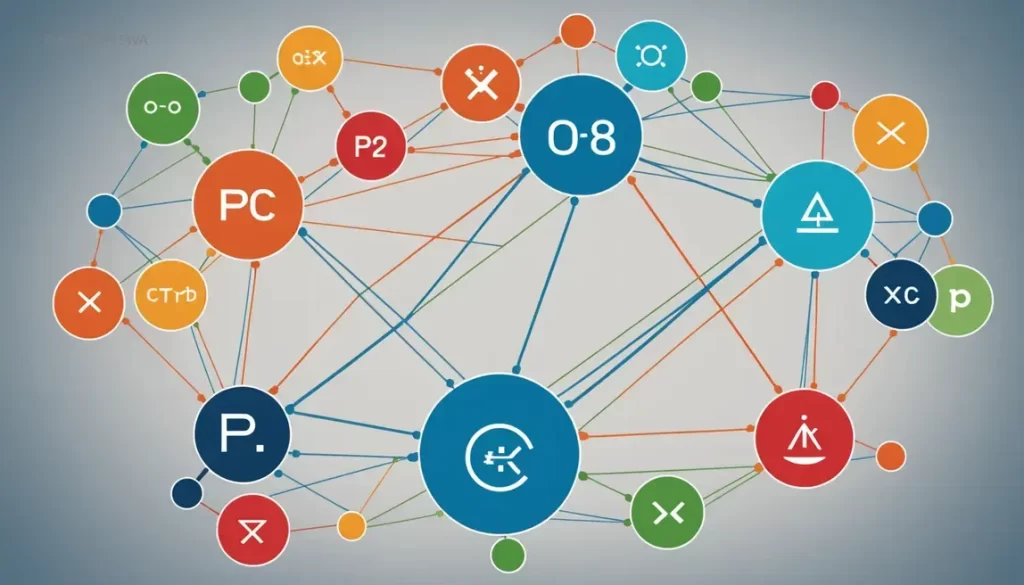
Balance Theory, developed by Fritz Heider in the mid-20th century, explores how individuals strive for cognitive consistency in their perceptions of social relationships. This psychological framework posits that people naturally seek harmony among their beliefs, attitudes, and interpersonal connections. Consequently, when imbalances occur, individuals experience psychological discomfort, motivating them to restore equilibrium through attitude changes or relationship adjustments. The theory’s applications span social psychology, marketing, and communication studies, offering insights into human behavior and decision-making processes. Furthermore, understanding Balance Theory helps explain phenomena such as group dynamics, persuasion, and conflict resolution, making it a cornerstone of modern psychological research.
The Foundations of Balance Theory: Heider’s P-O-X Model
Fritz Heider introduced Balance Theory in 1946, focusing on triadic relationships involving a person (P), another person (O), and an object or idea (X). According to Heider, individuals aim for balanced states where all relationships align positively or negatively. For instance, if P likes O and both like X, the triad remains balanced, fostering psychological comfort. Conversely, imbalances arise when relationships conflict, such as P liking O but disliking X that O favors. This dissonance creates tension, prompting P to alter attitudes toward O or X to achieve balance. Heider’s model emphasizes cognitive simplicity, as people prefer straightforward, consistent mental structures. Moreover, the theory assumes that balanced states are more stable and memorable than imbalanced ones, influencing social judgments and interactions. Consequently, Balance Theory provides a foundational lens for analyzing interpersonal dynamics and attitude formation.
Key Principles and Mechanisms of Cognitive Balance
Balance Theory operates on several core principles that govern how individuals perceive and adjust relationships. Firstly, the theory highlights the role of sentiment relations, where positive or negative feelings drive balance assessments. For example, if two friends share a positive view on a topic, their relationship strengthens through alignment. Secondly, imbalance triggers cognitive dissonance, a psychological state that motivates change to reduce discomfort. People might resolve imbalances by changing their attitudes, severing relationships, or misperceiving information. Thirdly, the theory incorporates symmetry, where relationships often reciprocate; if P likes O, O tends to like P, enhancing balance. Furthermore, Balance Theory accounts for indirect relationships, as imbalances in larger networks can cascade, affecting multiple connections. These mechanisms demonstrate how individuals actively seek consistency, shaping social behaviors and group cohesion. Nevertheless, cultural and contextual factors can modify these processes, highlighting the theory’s adaptability across diverse settings.
Applications in Social Psychology and Interpersonal Dynamics
Balance Theory finds extensive applications in social psychology, particularly in understanding group behavior and interpersonal conflicts. In group settings, individuals often align their attitudes with those of liked peers to maintain balance, explaining conformity and social influence. For instance, in a workplace team, members might adopt shared opinions to avoid dissonance with colleagues they respect. Additionally, the theory elucidates relationship dissolution, as imbalances from conflicting values can lead to estrangement or reevaluation. Marketing professionals leverage Balance Theory by associating products with admired figures, creating positive triads that influence consumer attitudes. Consequently, advertisements featuring celebrities aim to transfer positive sentiments from person to product, enhancing brand perception. Moreover, in communication studies, the theory helps analyze persuasion techniques, where messengers adjust messages to align with audience beliefs, fostering acceptance. These applications underscore Balance Theory’s relevance in predicting and managing social interactions.
Criticisms and Limitations of Balance Theory
Despite its insights, Balance Theory faces criticisms and limitations that scholars have addressed over time. One major critique is its oversimplification of human relationships, as real-world scenarios often involve complex, multi-faceted interactions beyond triads. For example, individuals may hold ambivalent feelings that Balance Theory struggles to capture, leading to inaccurate predictions. Furthermore, the theory assumes universal striving for balance, yet some cultures tolerate ambiguity or conflict more readily, challenging its cross-cultural validity. Additionally, cognitive dissonance does not always prompt change; people might rationalize imbalances or ignore inconsistencies, especially under cognitive load. Nevertheless, researchers have extended Balance Theory to address these gaps, incorporating factors like emotion intensity and situational constraints. Modern adaptations, such as network balance models, expand its scope to larger social structures, enhancing applicability. Consequently, while Balance Theory provides a valuable framework, it requires contextual refinement to fully explain diverse psychological phenomena.
Modern Extensions and Future Directions in Research
Recent advancements have expanded Balance Theory, integrating it with contemporary psychological and computational models. Scholars now apply network theory to analyze balance in large-scale social networks, using algorithms to detect clusters of aligned attitudes. For instance, online platforms like social media exhibit balance patterns, where users form echo chambers with like-minded peers. Furthermore, neuroscientific studies explore the brain mechanisms underlying balance restoration, linking cognitive dissonance to neural activity in regions like the anterior cingulate cortex. These interdisciplinary approaches enrich the theory’s explanatory power. Additionally, researchers investigate balance in artificial intelligence and human-computer interaction, designing systems that mimic human consistency-seeking behaviors. Future directions may focus on dynamic balance, examining how relationships evolve over time with changing contexts. Consequently, Balance Theory continues to evolve, offering insights into emerging fields like digital communication and behavioral economics, ensuring its ongoing relevance in psychological science.
Conclusion
Balance Theory remains a pivotal concept in psychology, elucidating how individuals pursue cognitive consistency in social relationships. Through Heider’s P-O-X model, it explains the mechanisms behind attitude alignment and conflict resolution. Applications in social psychology, marketing, and communication demonstrate its practical utility, while criticisms highlight areas for refinement. Modern extensions into network analysis and neuroscience promise further advancements. Ultimately, Balance Theory underscores the human drive for harmony, influencing behaviors from interpersonal interactions to broader societal trends. Consequently, continued research will deepen our understanding of cognitive processes, fostering applications in diverse domains such as education, therapy, and technology design.