
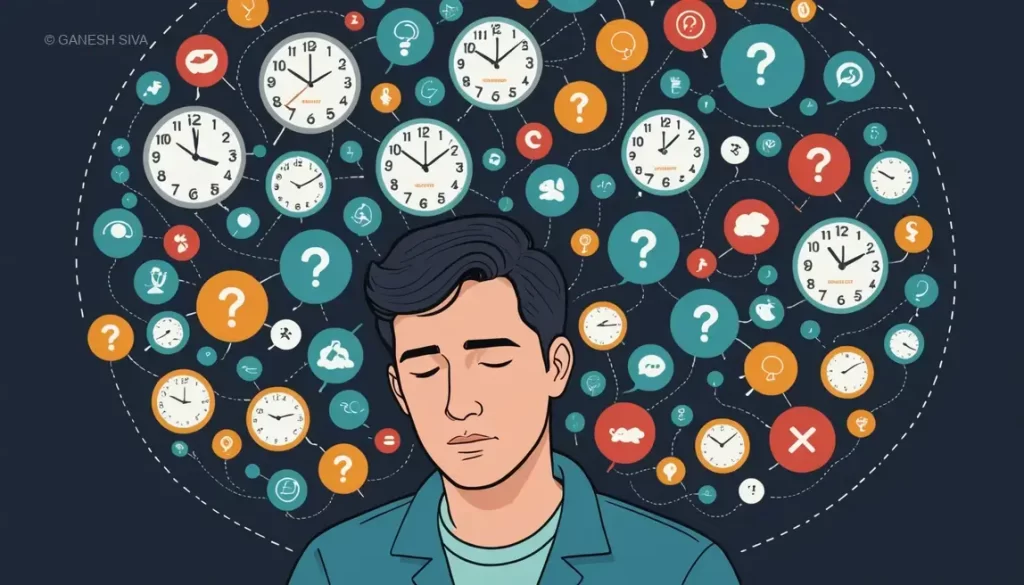
Imagine you’re standing in a grocery store aisle, staring at a wall of cereal boxes. At first, you feel confident—maybe even a little excited—about choosing the perfect breakfast. But as you scan the options, your brain starts to whir. Should you go for the healthy whole-grain flakes or the sugary childhood favorite? What about the organic brand with the higher price tag? By the time you finally grab a box, you’re not just tired; you’re mentally drained, and that simple choice has sapped your energy for bigger decisions later in the day. This phenomenon, known as decision fatigue, isn’t just about picking cereal; it’s a pervasive force that shapes our lives, from mundane tasks to life-altering choices. Rooted in our brain’s limited cognitive resources, decision fatigue occurs when the mental effort required to make numerous decisions depletes our willpower and judgment over time. Historically, this concept gained traction through psychological studies in the mid-20th century, but its relevance has exploded in our modern era of endless options and constant connectivity. Understanding decision fatigue is crucial because it doesn’t merely lead to poor choices—it can erode our emotional well-being, strain relationships, and even impact professional success. In this guide, we’ll delve deep into its mechanisms, explore real-world implications, and provide actionable strategies to combat it, empowering you to reclaim mental clarity and make better decisions with less stress.
What Is Decision Fatigue?
Decision fatigue refers to the deteriorating quality of decisions made by an individual after a long session of decision-making. It’s not just about feeling tired; it’s a specific cognitive depletion that affects our ability to weigh options rationally. This concept has its roots in psychological research, notably building on the work of Roy F. Baumeister and others who studied ego depletion and willpower. Over time, as we make more choices, our mental resources—like attention and self-control—become exhausted, leading to shortcuts, impulsivity, or avoidance. The long-term impact can be profound, contributing to burnout, reduced productivity, and even ethical lapses in high-stakes environments. By recognizing decision fatigue, we can start to mitigate its effects and preserve our cognitive reserves for what truly matters.
Deep Analysis
Neurologically, decision fatigue involves the prefrontal cortex, the brain region responsible for executive functions such as planning, reasoning, and self-control. When we make decisions, this area consumes glucose and other metabolic resources, leading to fatigue over time. Studies using fMRI scans show that repeated decision-making can reduce activity in the prefrontal cortex, making it harder to engage in complex thought. Emotionally, this depletion often manifests as irritability, anxiety, or apathy, as the brain struggles to regulate emotions under cognitive load. Historically, this aligns with research on willpower depletion, suggesting that decision-making is a finite resource that needs replenishment. Understanding these mechanisms helps explain why we might make poor choices late in the day or after many decisions, highlighting the importance of managing our cognitive load.
Real-Life Case Study
Consider a corporate executive, Sarah, who starts her day with back-to-back meetings, each requiring strategic decisions. By afternoon, she faces a critical budget allocation but finds herself opting for the easiest option rather than analyzing data thoroughly. This leads to overspending and missed opportunities, illustrating how decision fatigue can derail professional outcomes. Over weeks, this pattern contributes to team frustration and personal stress, showing the cumulative impact of unchecked fatigue.
Expert Action Plan
- Identify high-stakes decisions and schedule them for times when your mental energy is peak, such as mornings.
- Limit daily decisions by creating routines for repetitive tasks, like meal planning or outfit selection.
- Take regular breaks to rest your brain, using techniques like mindfulness or short walks to recharge.
- Delegate minor decisions to others when possible, reducing your cognitive load throughout the day.
- Monitor your energy levels and adjust your schedule accordingly, avoiding decision-heavy periods when fatigued.
The Neurological Basis of Decision Fatigue
At its core, decision fatigue is a brain-based phenomenon driven by the limits of our cognitive architecture. The prefrontal cortex, often called the brain’s ‘executive center,’ plays a pivotal role here. This region handles complex tasks like problem-solving, impulse control, and future planning, but it operates on a finite supply of neural energy. Each decision we make consumes glucose and other metabolic resources, leading to a gradual depletion that impairs function. Over time, this can result in reduced neural connectivity and slower processing speeds, making it harder to think clearly. Research from fields like cognitive neuroscience shows that this depletion isn’t just mental; it has physical correlates, such as increased stress hormones and altered brainwave patterns. By grasping these neurological underpinnings, we can better appreciate why decision fatigue isn’t a sign of weakness but a natural limitation of our biology.
Deep Analysis
Neurologically, the process involves the interaction between the prefrontal cortex and other brain regions like the amygdala, which handles emotional responses. As fatigue sets in, the prefrontal cortex’s ability to regulate the amygdala diminishes, leading to more emotional, impulsive decisions. This is why people under decision fatigue might snap at colleagues or make rash purchases. Historically, studies on ego depletion have linked this to willpower theories, suggesting that self-control is a muscle that tires with use. Emotionally, this manifests as feelings of overwhelm or helplessness, as the brain struggles to maintain equilibrium under cognitive strain. Understanding this helps explain why decision fatigue can trigger anxiety or depression in susceptible individuals, emphasizing the need for proactive management strategies.
Real-Life Case Study
Take John, a software developer who spends hours debugging code, making countless micro-decisions about algorithms and fixes. By evening, he’s mentally exhausted and argues with his partner over trivial matters, a direct result of his depleted prefrontal cortex failing to regulate emotions. This case shows how decision fatigue spills over into personal life, affecting relationships and well-being.
Expert Action Plan
- Engage in activities that boost brain health, such as regular exercise or meditation, to enhance cognitive resilience.
- Use decision-making tools like pros-and-cons lists to offload mental effort and reduce prefrontal cortex strain.
- Avoid multitasking during high-stakes decisions, as it divides attention and accelerates fatigue.
- Ensure adequate sleep and nutrition to support metabolic resources for brain function.
- Practice cognitive reframing to view decisions as opportunities rather than burdens, reducing emotional toll.
Emotional Impacts of Decision Fatigue
Decision fatigue doesn’t just cloud our judgment; it takes a heavy toll on our emotional landscape. When our cognitive resources are depleted, we often experience heightened stress, irritability, and a sense of overwhelm. This emotional fallout can strain personal relationships, as we might become short-tempered or withdrawn after a day of tough choices. Over time, chronic decision fatigue can contribute to anxiety disorders or burnout, as the constant mental load erodes our capacity for joy and connection. By exploring these emotional dimensions, we can see why managing decision fatigue is crucial not only for productivity but for overall mental health and happiness.
Deep Analysis
Emotionally, decision fatigue triggers a cascade of responses rooted in the brain’s stress systems. The hypothalamic-pituitary-adrenal (HPA) axis becomes activated, releasing cortisol and other stress hormones that amplify feelings of anxiety and fatigue. This can lead to a vicious cycle where stress impairs decision-making, which in turn increases stress. Historically, psychological research on burnout and decision-making has shown that emotional exhaustion often precedes cognitive depletion, highlighting the bidirectional relationship. Long-term, unchecked decision fatigue can diminish life satisfaction and increase vulnerability to mental health issues, underscoring the importance of emotional self-care in decision management.
Real-Life Case Study
Consider Maria, a teacher who makes hundreds of decisions daily, from lesson plans to student conflicts. By the end of the week, she feels emotionally drained, snapping at her family and losing interest in hobbies. This case illustrates how decision fatigue can erode emotional reserves, affecting both professional and personal spheres.
Expert Action Plan
- Incorporate stress-reduction techniques like deep breathing or journaling to manage emotional responses to decision fatigue.
- Set boundaries around decision-making times, such as designating ‘decision-free’ evenings to recharge emotionally.
- Seek social support by discussing decisions with trusted friends or mentors, reducing the emotional burden.
- Practice self-compassion, acknowledging that fatigue is normal and not a personal failure.
- Engage in activities that bring joy and relaxation, like hobbies or nature walks, to counter emotional depletion.
Strategies to Combat Decision Fatigue
Overcoming decision fatigue requires a proactive approach that blends practical habits with psychological insights. By implementing targeted strategies, we can conserve mental energy and make better choices with less strain. These methods range from simplifying daily routines to leveraging technology for support, all aimed at reducing the cognitive load that leads to fatigue. In this chapter, we’ll explore actionable steps that anyone can adopt, drawing on expert recommendations and real-world success stories to illustrate their effectiveness.
Deep Analysis
Strategically combating decision fatigue involves understanding the principles of cognitive load theory and habit formation. By automating trivial decisions—like what to wear or eat—we free up mental resources for more important matters. This aligns with research on willpower conservation, which shows that routines can prevent depletion. Emotionally, these strategies reduce stress by creating a sense of control and predictability. Historically, figures like Steve Jobs famously wore the same outfit daily to minimize decision fatigue, a practice rooted in efficiency psychology. Long-term, adopting these habits can enhance overall well-being and decision quality, making them essential tools in our mental toolkit.
Real-Life Case Study
Look at Alex, an entrepreneur who used to struggle with decision fatigue from managing a startup. By implementing a structured morning routine and delegating minor tasks, he reduced his daily decisions by 30%, leading to improved focus and reduced stress within months.
Expert Action Plan
- Create decision matrices or use apps to prioritize tasks, focusing energy on high-impact choices.
- Establish daily rituals for repetitive decisions, such as meal prepping or setting a consistent wake-up time.
- Limit options in personal and professional contexts to avoid choice overload, which exacerbates fatigue.
- Take regular mental breaks throughout the day, using techniques like the Pomodoro method to sustain energy.
- Reflect on past decisions to learn patterns and improve future efficiency, reducing unnecessary cognitive effort.
Decision Fatigue in Professional Settings
In the workplace, decision fatigue can have far-reaching consequences, affecting everything from leadership effectiveness to team morale. Professionals often face a barrage of choices daily, from strategic planning to interpersonal conflicts, which can quickly deplete their cognitive reserves. This chapter delves into how decision fatigue manifests in various industries, its impact on productivity and innovation, and ways organizations can mitigate it. By addressing this issue, companies can foster healthier work environments and drive better outcomes.
Deep Analysis
Neurologically, professional decision fatigue is exacerbated by high-stakes environments and constant interruptions, which strain the prefrontal cortex. Emotionally, it can lead to burnout, reduced job satisfaction, and increased turnover rates. Historically, management studies have linked decision fatigue to errors in judgment, such as in healthcare or finance, where tired professionals make costly mistakes. Long-term, organizations that ignore this issue risk decreased efficiency and employee well-being, highlighting the need for structural changes like flexible scheduling or decision-support systems.
Real-Life Case Study
Consider a hospital where nurses make rapid-fire decisions about patient care. Over time, decision fatigue leads to medication errors and staff burnout, prompting the administration to implement shift rotations and decision aids, resulting in improved safety and morale.
Expert Action Plan
- Implement decision-making protocols in teams to distribute cognitive load and reduce individual fatigue.
- Encourage regular breaks and mindfulness practices during work hours to maintain mental clarity.
- Use data-driven tools to support complex decisions, minimizing guesswork and cognitive strain.
- Foster a culture that values work-life balance, reducing off-hours decision pressures.
- Provide training on recognizing and managing decision fatigue, empowering employees to self-regulate.
Long-Term Management and Prevention
Sustaining mental energy and preventing decision fatigue over the long haul requires a holistic approach that integrates lifestyle changes, mindset shifts, and ongoing self-awareness. This chapter explores how to build resilience against cognitive depletion, ensuring that decision fatigue doesn’t become a chronic issue. By adopting preventive measures, we can enhance our decision-making capacity and overall quality of life, turning fatigue management into a lifelong practice.
Deep Analysis
Long-term management involves nurturing brain health through consistent habits, such as adequate sleep, balanced nutrition, and regular physical activity, which support metabolic resources for the prefrontal cortex. Emotionally, cultivating a growth mindset can reduce the perceived burden of decisions, as viewing challenges as opportunities lessens stress. Historically, preventive strategies have roots in positive psychology and wellness movements, emphasizing proactive care over reactive fixes. By integrating these elements, individuals can create a sustainable framework that minimizes decision fatigue’s impact over years, leading to improved mental agility and emotional stability.
Real-Life Case Study
Take Lisa, who after years of struggling with decision fatigue, adopted a comprehensive wellness plan including meditation, exercise, and strategic planning. Within a year, she reported higher productivity and reduced anxiety, demonstrating the power of long-term prevention.
Expert Action Plan
- Develop a personalized decision-making calendar to spread out major choices and avoid clustering.
- Invest in continuous learning about cognitive science to stay informed on best practices for fatigue management.
- Build a support network of peers or coaches for accountability and shared decision-making insights.
- Regularly assess and adjust your routines based on energy levels and life changes, ensuring adaptability.
- Celebrate small victories in managing fatigue to reinforce positive habits and maintain motivation.
Conclusion
In wrapping up this definitive guide, it’s clear that decision fatigue is more than just a fleeting sense of tiredness—it’s a complex interplay of neurological, emotional, and practical factors that shape our daily lives. From the grocery store aisle to the boardroom, its effects ripple through our choices, relationships, and well-being. By understanding its mechanisms, as explored in chapters on neurology and emotion, we gain the insight needed to combat it effectively. The strategies and action plans provided offer tangible steps to reduce cognitive load, whether through simplifying routines or leveraging professional tools. Remember, managing decision fatigue isn’t about eliminating decisions altogether but about optimizing our mental resources to make better ones with less strain. As you move forward, consider this not as a burden but as an opportunity to enhance your clarity and resilience. For further reading, check out resources on decision fatigue or explore our internal guide on cognitive wellness. Embrace these practices, and you’ll find yourself navigating life’s choices with renewed energy and confidence.