
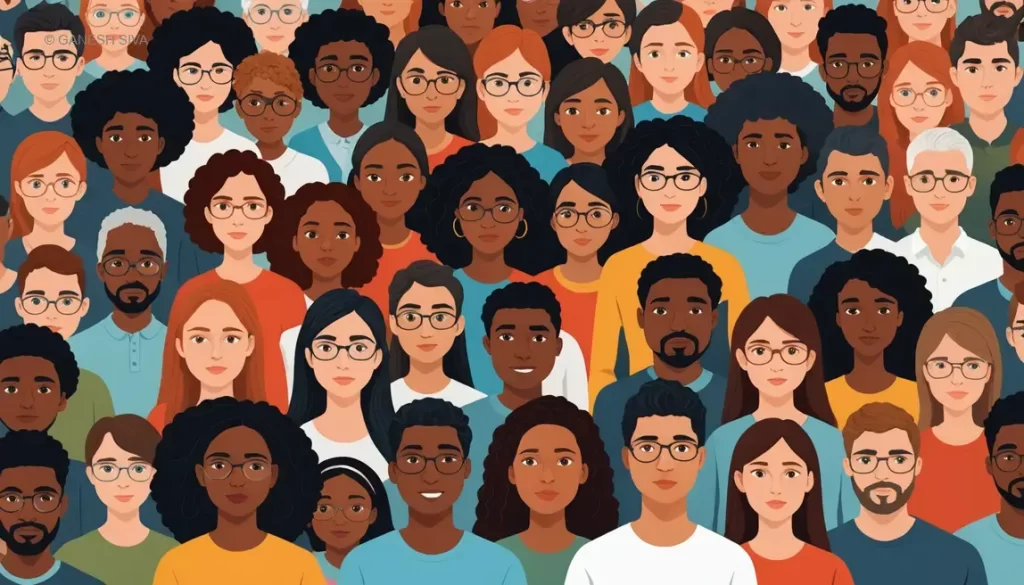
In-group bias, a deeply ingrained human tendency to favor those within our own group over others, shapes interactions, decisions, and perceptions in profound ways. This article delves into the origins, mechanisms, and effects of in-group bias, providing insights into how it influences societal dynamics and personal relationships. Through exploring its psychological roots and real-world implications, we aim to shed light on this pervasive aspect of human behavior.
The Psychology Behind In-group Bias
The psychology behind in-group bias provides insights into the intrinsic human need to belong and the mechanisms that drive our social preferences. This chapter delves into the psychological foundations of in-group bias, highlighting realistic conflict theory and social identity theory as central frameworks for understanding how and why these biases form and persist.
Realistic Conflict Theory posits that in-group bias and intergroup conflicts arise from competition over limited resources. This competition can be for tangible resources, such as food and territory, or for intangible ones, like power and prestige. The theory suggests that when groups vie for scarce resources, hostility and prejudice increase, leading to stronger in-group preferences as individuals band together against perceived out-group threats. A classic real-life example of this theory in action is provided by the Robbers Cave Experiment. In this study, two groups of boys were taken to a summer camp (Robbers Cave State Park) and were initially kept unaware of each other’s presence. When the groups eventually learned about each other, competition was introduced through various games and activities with valuable prizes for winners. This competition led to the emergence of significant inter-group hostility and prejudice. Yet, when cooperative tasks that required joint efforts for a common goal were introduced, animosity decreased, demonstrating how competition and cooperation can influence group dynamics and biases.
Social Identity Theory extends the understanding of in-group bias by emphasizing the psychological underpinnings related to self-concept and identity. According to this theory, individuals derive part of their self-esteem from the groups to which they belong. This belonging leads to an enhancement of the in-group’s status, often at the expense of the out-group, to maintain a positive social identity. People categorize themselves and others into various social groups, such as nationality, religion, social class, and more. These categorizations form the basis for in-group identification and out-group discrimination as individuals strive to maintain or enhance their self-esteem.
These theories underscore the multifaceted nature of in-group bias, revealing it as a product of both environmental circumstances and innate psychological needs. Through the lens of realistic conflict theory and social identity theory, we see how the interplay between external competition and internal desires for a positive social identity can fuel biases that lead to in-group favoritism and out-group derogation.
To succinctly iterate, the psychological underpinnings of in-group bias rest on the dual pillars of competition for resources and the inherent human need for a positive social identity. Understanding these foundations allows for a deeper comprehension of the mechanisms that exacerbate or mitigate the effects of in-group bias, providing a basis for interventions aimed at fostering intergroup harmony and reducing prejudice.
The Role of Cultural and Societal Norms
In the complex tapestry of human society, cultural and societal norms play a pivotal role in either reinforcing or challenging in-group bias. These norms, which are deeply ingrained patterns of behavior deemed acceptable by a society, substantively contribute to the formation of cultural groups centered around observable traits and behaviors. Such traits can range from language and religion to more nuanced social habits and customs, all serving as markers for inclusion or exclusion within a group. This delineation, often subconsciously, fosters a sense of belonging among members of the same group while simultaneously erecting subtle barriers against those deemed to belong to ‘out-groups’.
The impact of societal norms and values on the maintenance of in-group bias cannot be overstated. Societal values, imparted through institutions such as education, media, and legislation, continuously shape perceptions of what it means to be a part of certain groups, thereby fueling the biases that underpin these perceptions. For instance, media portrayals that consistently depict certain groups in a negative light can reinforce stereotypes and prejudices, making in-group bias more pronounced. Conversely, inclusive representation can challenge these biases, promoting a more integrated and cohesive social fabric.
Moreover, societal norms dictate the rituals of inclusion and exclusion, often codifying them into the legal and institutional frameworks that govern everyday life. Such structures can inadvertently uphold systemic biases, making it challenging for those outside the dominant group to break into closed social circles or attain positions of power. This entrenchment of in-group preferences within societal structures highlights the cyclical nature of bias, where societal norms both reflect and perpetuate in-group tendencies.
Exploring mechanisms through which societies can either diminish or amplify in-group preferences reveals a range of strategies. Educational programs aimed at fostering cross-cultural understanding and empathy can challenge stereotypes and reduce biases from a young age. Policies promoting diversity and inclusion within workplaces and public institutions can also serve to dismantle systemic barriers, encouraging a more equitable representation of different groups. Moreover, public campaigns that celebrate diversity and the contributions of various cultural groups can shift societal norms towards more inclusive attitudes.
Additionally, the role of intergroup contact in breaking down in-group biases should not be underestimated. Facilitated interactions between members of different groups, especially when they occur under conditions of equality and common goals, can significantly reduce prejudice and foster a more inclusive society. Such efforts, though varied in their approach, share a common goal: to disrupt the cycle of in-group bias reinforced by cultural and societal norms.
In understanding the multifaceted ways in which societal norms influence in-group bias, it becomes clear that mitigating its effects requires a concerted effort across different spheres of society. This necessitates not just a change in individual attitudes but a transformation in the societal structures that enable and perpetuate these biases. It is within this complex interplay of changing norms, values, and institutional practices that the potential for a more inclusive, equitable society lies, moving beyond in-group preferences to embrace a broader, more diverse notion of community.
In-group Bias in Everyday Life
In examining the manifestations of in-group bias in everyday life, we venture deeper into the subtleties and direct impacts that these biases have in various social settings. In-group bias is not merely an abstract, psychological concept but a tangible, influential force in workplaces, social circles, and beyond. Its presence ranges from the very subtle to unmistakably overt forms, shaping interactions, decisions, and societal structures.
In the professional sphere, in-group bias can influence hiring decisions, promotions, and teamwork dynamics. Employers and managers may unknowingly favor candidates and employees who share similar backgrounds, interests, or beliefs, disadvantaging equally or more qualified individuals who do not fit the in-group profile. Such bias not only affects the careers of individuals but also limits the diversity and innovative potential of organizations.
Social circles, including friendship groups and community organizations, often form around common interests, backgrounds, and beliefs. While this is natural to some extent, it can lead to the exclusion of those who might slightly differ, reinforcing homogeneity and limiting exposure to diverse perspectives. In more overt forms, in-group bias can contribute to the creation of echo chambers, where only similar opinions are voiced and validated, stifying personal and collective growth.
Educational settings are also not immune. From early childhood, students may gravitate towards peers with similar backgrounds, inadvertently or consciously excluding others. Such divisions can be exacerbated by educators’ biases, whether in classroom dynamics, participation encouragement, or disciplinary actions, affecting students’ academic and social development.
These everyday instances of in-group bias have profound implications. Decision-making processes, whether in hiring, promotions, or social inclusion, can become skewed, favoring conformity over merit and diversity. This can stifle innovation, equity, and fairness across various spheres. Social cohesion within communities may be undermined, with increased potential for conflict arising from perceived out-group threats. Moreover, such biases contribute to the perpetuation of stereotypes and discrimination, feeding into a cycle of social inequality and divisiveness.
To recognize and counteract in-group bias, individuals and communities can adopt several strategies. Firstly, fostering self-awareness about one’s biases and their impacts is crucial. This involves reflecting on personal social networks and decision-making patterns to identify bias influences. Educational programs that highlight the value of diversity and the costs of biases can equip individuals with the knowledge to challenge their prejudices.
Promoting intergroup interactions in safe, cooperative settings enhances empathy and understanding across different groups, breaking down stereotypes and misconceptions. Organizations can implement structured decision-making processes that prioritize merit and fairness, ensuring diverse representation and voices are considered. Communities can actively seek to create inclusive spaces, celebrating diversity as a strength rather than a barrier.
By actively engaging with such strategies, individuals and communities not only challenge in-group bias but also pave the way for a more inclusive, equitable, and diverse society. This sets a foundation for the succeeding chapter which delves into specific, practical strategies and interventions designed to combat in-group bias, focusing on the importance of educational and social interventions, intergroup contact, and shared goals.
Overcoming In-group Bias: Strategies and Interventions
Overcoming in-group bias requires a multifaceted approach that includes educational and social interventions tailored to foster understanding and empathy among diverse groups. These interventions have demonstrated effectiveness in reducing prejudicial attitudes and facilitating positive intergroup interactions.
Educational programs that incorporate curriculum on diversity, equity, and inclusion are paramount. Workshops and training sessions that emphasize the value of diversity within organizations and schools can alter perceptions and behaviors by highlighting commonalities among individuals from different backgrounds. Interactive exercises that allow participants to step into the shoes of those who are different from them can foster empathy and break down stereotypes.
Social interventions that promote intergroup contact are also critical. These should be designed to encourage positive interactions in cooperative settings, rather than competitive ones, to reduce the emphasis on us-versus-them mentalities. The contact hypothesis, a well-established psychological theory, posits that under appropriate conditions, interpersonal contact is one of the most effective ways to reduce prejudice between majority and minority group members. To this end, creating opportunities for intergroup contact, such as community service projects or cultural exchange programs, where individuals can work towards a shared goal, has proven beneficial.
The importance of cultivating shared goals and mutual interdependence cannot be overstated. When groups recognize that they share common objectives that can only be achieved through collaboration, this realization can significantly mitigate in-group bias. Examples include joint tasks that necessitate pooling of resources and efforts from members of different groups to succeed, such as community clean-up initiatives or collaborative problem-solving tasks in organizational settings.
Success stories from around the world offer valuable lessons. For instance, initiatives like the Integrated Education Fund in Northern Ireland, where children from different sectarian backgrounds are educated together, demonstrate the potential of shared educational experiences to bridge historical divides. Similarly, in Rwanda, community reconciliation programs that bring together genocide survivors and perpetrators to work on community projects have contributed to healing and reconciliation in the post-genocide era.
Organizations and communities have adopted best practices to tackle in-group bias effectively. These include implementing policies that promote diversity and inclusion, training staff to recognize and challenge their biases, and creating spaces for open dialogue about differences and similarities among individuals.
Moreover, leveraging technology to facilitate virtual intergroup contact can reach wider audiences, connecting individuals from different geographic, cultural, and ideological backgrounds. Online platforms can host virtual reality experiences, interactive dialogues, and collaborative projects that promote understanding and empathy across divides.
In conclusion, overcoming in-group bias requires concerted efforts across education, social interventions, and policy. By fostering empathy, facilitating intergroup contact, and emphasizing shared goals and mutual interdependence, it is possible to reduce the adverse effects of in-group bias and promote a more inclusive society. Highlighting success stories and best practices serves as a roadmap for organizations and communities worldwide to navigate the challenges of in-group bias with proven strategies and interventions.
The Future of In-group Bias: Challenges and Opportunities
The landscape of global interconnectivity is shaping in-group and out-group dynamics in unprecedented ways. As physical distances become less significant, our inherent tendency toward in-group bias faces both profound challenges and remarkable opportunities. The increasing exposure to diverse cultures and perspectives facilitated by global connectivity could potentially dilute the starkness of in-group preferences, promoting a more inclusive outlook. However, this same connectivity may also fortify in-group biases, as individuals seek comfort in familiar groups amidst a deluge of global information and interaction. Therefore, understanding and navigating the future of in-group bias necessitates a nuanced exploration of these evolving dynamics.
The role of emerging technologies and social media in shaping in-group bias is particularly pivotal. Digital platforms have become the primary arena for social interaction for vast segments of the global population. These technologies have the dual potential to either exacerbate or ameliorate in-group biases. On the one hand, algorithms can create echo chambers that reinforce existing prejudices and highlight out-group differences, fueling division. On the other hand, when leveraged thoughtfully, these same platforms can introduce individuals to diverse perspectives and reduce the distance between “us” and “them”. The crucial factor lies in how these technologies are designed, utilized, and regulated.
The future directions of research and policy interventions aimed at promoting inclusivity and cohesion offer a beacon of hope in addressing in-group bias. Research must continue to delve deeper into the psychological underpinnings of in-group bias, exploring not only its origins but also the conditions under which it is exacerbated or diminished. This research should leverage the latest advancements in technology, including artificial intelligence, to analyze data on a scale previously unimaginable, offering insights that can inform more effective interventions.
In line with this, policy interventions must evolve to keep pace with the changing dynamics of social interaction in a digitized world. Educational programs, previously highlighted as effective in reducing in-group bias, need to be adapted for the digital age. These programs should aim to foster digital literacy that emphasizes critical thinking and empathy in navigating online spaces. Moreover, policies that encourage diversity and inclusion in online platforms, such as anti-discrimination algorithms and inclusive content policies, can play a crucial role in shaping the social norms that guide online interaction.
The path forward will undoubtedly be fraught with challenges as societies worldwide grapple with the implications of an increasingly interconnected world on social cohesion. Yet, this evolving landscape also presents unparalleled opportunities to redefine in-group and out-group dynamics. By harnessing the power of emerging technologies and grounding actions in the rich body of research on human social behavior, there is potential to foster a global community characterized by understanding, inclusivity, and cohesion. The journey toward overcoming in-group bias, while complex, is essential for the well-being of increasingly diverse and interconnected societies.
Conclusions
In-group bias, deeply rooted in human psychology and shaped by societal structures, presents both challenges and opportunities for fostering a more inclusive world. Understanding its underpinnings and manifestations allows us to devise effective strategies to mitigate its effects. By embracing shared goals and promoting intergroup understanding, we can counteract the divisive tendencies of in-group bias and build stronger, more cohesive communities.