
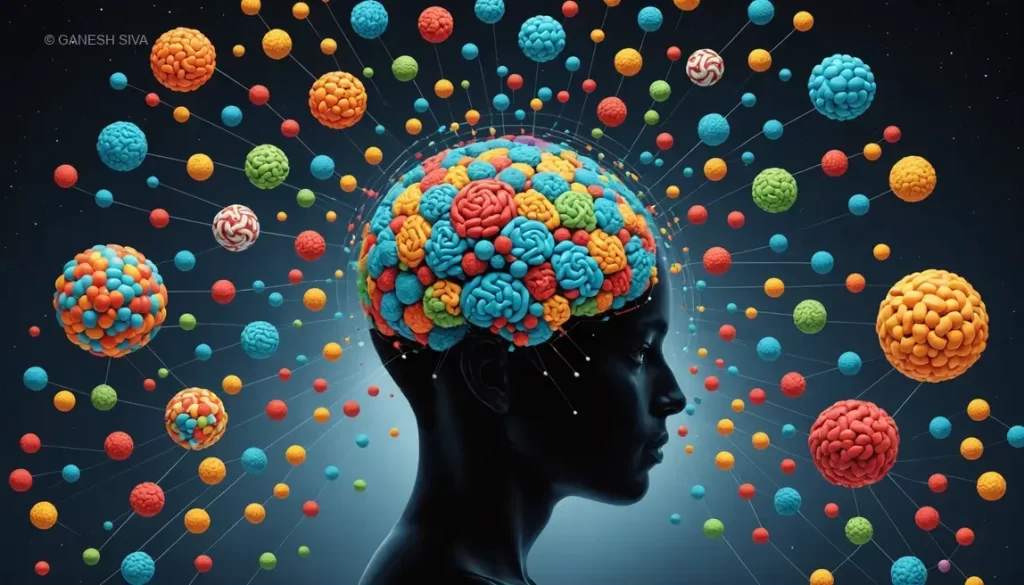
Proportionality bias is a fascinating cognitive error where big events are often assumed to have big causes. This bias reflects our innate desire to find patterns and make sense of the world around us in a balanced and orderly manner. In this article, we delve into the intricacies of proportionality bias, how it shapes our understanding of events, and its significant influence on decision-making processes and the adoption of conspiracy theories.
Understanding Proportionality Bias
Proportionality bias is a psychological phenomenon where individuals tend to believe that big events must have big causes. This belief is rooted in the human necessity for pattern recognition and causality, driving us to make sense of the world through proportional relationships. Our brains are wired to seek out patterns and causes for events, especially those that are significant or emotionally charged, leading us to sometimes draw incorrect conclusions about the magnitude of their causes.
This cognitive bias can have profound implications for how people interpret and react to major events. A notable example is the proliferation of conspiracy theories following the death of Princess Diana. The tragic and sudden nature of her death led many to reject the possibility that it could have been caused by something as mundane as a drunk driving accident. Instead, the proportionality bias led people to believe in more complex conspiracy theories that seemed, to them, to be more fitting causes for the death of such an iconic figure.
The psychological underpinnings of proportionality bias involve several cognitive processes. Firstly, human beings have an innate need to understand the world around them, which includes identifying causes for events. This drive for causality can push us towards oversimplifying complex situations into a linear cause-and-effect relationship. Secondly, our tendency towards pattern recognition means we are predisposed to see connections where there may be none, leading us to correlate the magnitude of events directly with the magnitude of their causes.
Moreover, proportionality bias is not just a matter of individual psychology, but it can also reflect and reinforce cultural narratives and belief systems. In societies where there is a strong emphasis on justice and the idea that ‘you reap what you sow,’ there can be a collective inclination towards believing that significant outcomes must be the result of equally significant causes. This can amplify the effects of proportionality bias on a societal level, influencing public opinion and even policy decisions.
The intriguing but potentially misleading nature of proportionality bias demonstrates the importance of critical thinking and awareness of cognitive biases. By understanding how our perceptions of causality and significance can be skewed, individuals can better navigate their interpretations of major events, like the death of Princess Diana, and resist the allure of overly simplistic explanations. This awareness is crucial in a world where information is abundant, and the truth is often more complicated than it seems at first glance.
The Role of Proportionality Bias in Decision Making
In the realm of decision-making, proportionality bias serves as a significant influencer, often operating beneath the surface of our conscious thought processes. This bias prompts individuals and collectives to draw conclusions or make choices based on the assumed magnitude of events and their causes, rather than on empirical evidence or rational consideration. The intricate ways in which proportionality bias interweaves with human reasoning processes can lead to skewed assessments of risks, advantages, and outcomes, impacting everything from personal life choices to global policy formation.
Consider, for instance, how individuals might assess their personal risk of experiencing dramatic events, such as terrorist attacks or natural disasters. Proportionality bias can cause an overestimation of these risks if recent events have been particularly catastrophic or heavily covered in media. This skewed perception can lead to decision-making that prioritizes unlikely but frightening risks over more mundane, yet statistically more likely hazards, such as car accidents or lifestyle-related health issues. Here, the bias distorts an individual’s ability to accurately assess and respond to the risks they actually face.
In collective decision-making contexts, such as policy formation or group strategy setting, proportionality bias can lead to similarly flawed outcomes. When organizational or national leaders fall prey to this bias, they might allocate resources or shape policies in ways that disproportionately focus on preventing or responding to high-magnitude events, potentially at the expense of more pressing but less dramatic concerns. The aftermath of headline-grabbing incidents often sees a surge in policy shifts or public demands for action that may not align with an objective analysis of needs or effective solutions, illustrating how proportionality bias can divert attention and resources away from more statistically significant threats.
Furthermore, this bias can affect the evaluation of causes and solutions, leading decision-makers to favor broad, sweeping measures that seem to correspond to the ‘size’ of an issue, even when targeted, nuanced approaches might be more effective. For instance, in the wake of financial crises, the call for massive regulatory overhaul might overshadow the potential benefits of specific, targeted interventions that directly address the underlying issues.
Understanding the impact of proportionality bias in decision-making necessitates a deep dive into how it interacts with other cognitive biases and logical fallacies, influencing not only the assessment of causes and effects but also the emotional weight given to different outcomes. By highlighting these interactions, it becomes clear how proportionality bias can lead to decisions that might feel intuitively correct yet are mismatched with the actual scale or nature of the problem at hand.
In the subsequent exploration of proportionality bias in everyday life, we will delve into the subtleties of how this bias shapes our views and behaviors in a broad array of scenarios, from interpreting news stories to making lifestyle choices. Understanding the pervasive influence of proportionality bias opens the door to more nuanced critical thinking and decision-making practices, illustrating the importance of critical thinking and awareness of cognitive biases in making well-rounded decisions that accurately reflect the realities of the world around us.
Proportionality Bias in Everyday Life
Proportionality bias, a cognitive shortcut that leads us to expect outcomes to be naturally related to their causes in terms of size or significance, infiltrates our everyday lives in both overt and subtle ways. Its manifestations range from our reactions to significant global events to the way we interpret personal experiences or assign blame and reward.
One common instance is in our consumption and interpretation of news. When faced with large-scale tragedies such as natural disasters or terrorist attacks, proportionality bias can cause us to overestimate the likelihood of such events reoccurring, especially if the media coverage is extensive and emotionally charged. Conversely, smaller-scale but equally tragic events might not impact our perception of risk to the same extent if they receive less attention. This uneven weighting based on perceived magnitude rather than statistical reality skews our understanding of the world around us, leading to distorted risk assessments.
In personal contexts, proportionality bias influences how we attribute success and failure. For example, if someone achieves a significant career milestone, we may overvalue the role of individual talent or effort and undervalue the contributions of luck or external support. This bias can also skew our emotional reactions to events. Big achievements or losses feel like they should have big causes, leading us to attribute more blame or credit than may be warranted.
This bias extends to how we process health information. For instance, the fear of major diseases often doesn’t accurately reflect an individual’s actual risk. Sensational stories about rare diseases or medical breakthroughs may lead people to overestimate their personal risk or the efficacy of certain treatments, while underestimating the impact of small, daily health decisions.
Understanding the pervasive nature of proportionality bias in everyday life is crucial not only for recognizing how it influences our perceptions and judgments but also for laying the groundwork to counteract its effects. The subsequent chapter will delve into strategies to mitigate proportionality bias, emphasizing critical thinking, reliable information, and perspective-taking. By becoming more aware of how proportionality bias shapes our thinking, we can take deliberate steps to adopt a more balanced and rational approach to understanding the world, making decisions not based on distorted perceptions of magnitude but on a careful consideration of the facts and probabilities.
Combating Proportionality Bias
Combating Proportionality Bias: Strategies to Mitigate Its Effects
While the previous chapter examined how proportionality bias infiltrates our daily lives, impacting our reactions and judgments in both trivial and significant matters, this segment proposes measures to counter such cognitive distortions. Addressing proportionality bias necessitates an intentional shift towards conscious awareness and the employment of strategic mental tools aimed at fostering a more analytical mindset.
A foundational approach in mitigating the effects of proportionality bias is the cultivation of critical thinking skills. This involves questioning the immediacy of our assumptions and the evidence supporting them. When faced with situations where this bias is likely to surface, individuals should pause to evaluate the validity of a cause-and-effect relationship, especially when disproportion seems intuitive. Encouraging skepticism towards initial impressions prompts a deeper dive into the complexity of events, potentially unveiling overlooked factors that played a role.
Moreover, the pursuit of reliable information stands as a crucial bulwark against proportionality bias. In an era where misinformation can spread rapidly, verifying facts through multiple reputable sources is vital. This practice not only enhances one’s understanding of events but also encourages a habit of due diligence before forming conclusions. By actively seeking out well-founded data, individuals can construct a more accurate and nuanced picture of reality, subsequently reducing the likelihood of succumbing to simplifications that proportionality bias promotes.
The introduction of perspective-taking into one’s cognitive toolkit offers another effective strategy. Understanding that personal biases, including the inclination towards proportionality, can color our interpretations leads to a conscious effort to consider alternative viewpoints. This process involves empathetically putting oneself in the shoes of others or imagining how various stakeholders perceive a situation. Such an exercise not only broadens one’s own perspective but also mitigates the impact of proportionality bias by highlighting the multi-dimensional nature of cause and effect.
Engaging in discussions with a diverse group of people serves as an extension of perspective-taking, helping to challenge and refine one’s views. Exposing oneself to a wide array of opinions and experiences can illuminate the complexity behind events and decisions, further reducing the allure of simplistic explanations offered by proportionality bias.
The subsequent enhancement of awareness about proportionality bias, combined with the implementation of these strategies, fosters a more balanced and rational approach to understanding the world. As this chapter concludes, the following discussion will extend into how cultural and individual differences influence the manifestation and mitigation of proportionality bias, enriching our comprehension of this cognitive phenomenon on a global scale.
Cultural and Individual Differences
Building on the strategies outlined for mitigating the effects of proportionality bias, it becomes pertinent to explore how cultural and individual differences impact the manifestation and management of this bias. The influence of culture on proportionality bias cannot be overstated, considering how deeply societal norms and values are ingrained in our cognitive processes. Research indicates that education, media, and social practices play significant roles in either contributing to or mitigating proportionality bias across different cultures.
Education systems across cultures emphasize varying levels of critical thinking and analytical skill development. In societies where education focuses more on rote learning than on questioning and analysis, individuals may be more susceptible to proportionality bias. This is because the lack of critical thinking skills can make it difficult for individuals to assess the validity of proportional relationships between causes and effects. Conversely, educational systems that prioritize critical thinking and the questioning of information contribute to a societal temperament that is less prone to disproportionality in reasoning.
The media’s role in either perpetuating or mitigating proportionality bias is also significant. In cultures where media outlets predominantly feature sensational news and conspiracy theories, the population may be more inclined towards proportionality bias, as these narratives often rely on simplistic causal explanations for complex events. On the other hand, media that encourages skepticism and the exploration of multiple viewpoints can help cultivate a public that is more resilient to disproportionality in reasoning.
Moreover, social practices and narratives within different cultures can predispose individuals towards certain biases. For example, cultures that valorize historical or religious narratives that contain simplistic moral or causal explanations might reinforce proportionality bias. Meanwhile, societies that embrace complexity and uncertainty in their narratives might be more adept at handling proportional reasoning more accurately.
Cultural differences in susceptibility to conspiracy theories offer a clear illustration of these influences. In some cultures, a strong emphasis on community and collective history may make conspiracy theories that align with these narratives more appealing. In contrast, cultures that prize individualism and critical personal inquiry might display a lower tendency to adopt conspiratorial explanations without substantial evidence.
Understanding these cultural nuances is crucial in formulating more effective strategies to combat proportionality bias. Tailoring educational content, media regulations, and social interventions to the specific cognitive inclinations of a culture can enhance the efficacy of efforts aimed at mitigating this bias. As we move forward, recognizing and respecting these cultural differences in the approach to addressing proportionality bias will be key to fostering a more rational and analytical global society.
Conclusions
Proportionality bias pervades many aspects of human cognition, affecting how we interpret events, make decisions, and understand the world. By becoming aware of this bias and employing strategies to counteract it, we can improve our critical thinking skills and approach information and events with a more balanced perspective. Understanding the role of culture and environment in shaping this bias further enriches our comprehension of its influence on our lives.