
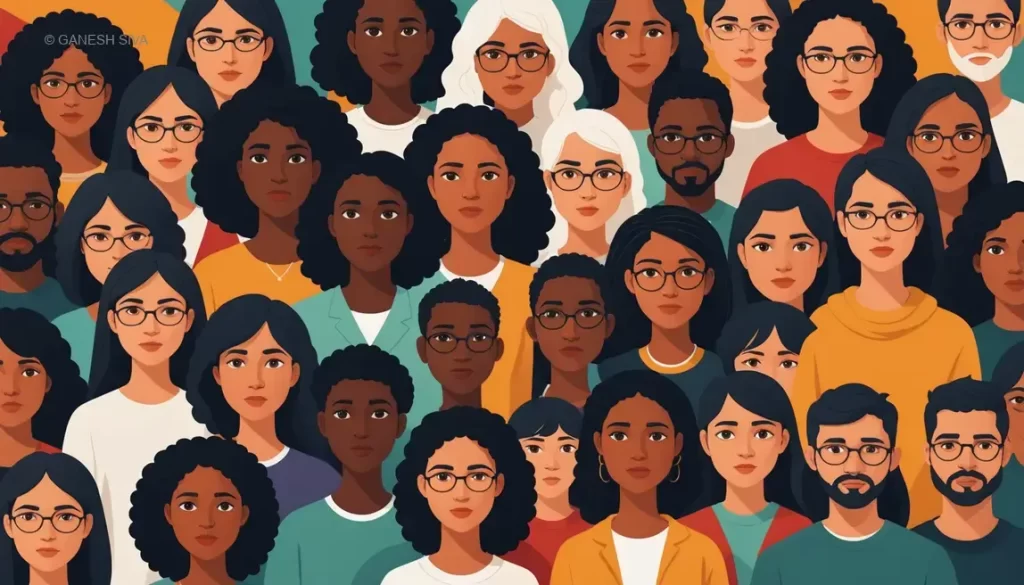
Cultural bias is the often unseen force that shapes our perception, decisions, and interactions. It’s rooted in the cultural context one grows up in, affecting the way individuals interpret the world around them. This article delves into cultural bias, examining its manifestations and implications across various domains of society. Through understanding cultural bias, we aim to foster a more inclusive worldview.
Understanding Cultural Bias
Cultural bias is an insidious phenomena that shapes how we see the world, affecting our interpretations, judgments, and interactions. It is the lens through which we view all aspects of life, influenced profoundly by the culture we are a part of. This intrinsic part of human cognition influences our language, logic, social norms, and values—often without our conscious awareness.
When we talk about cultural bias, it is crucial to recognize that it exists in both intentional and unintentional forms. Intentional biases are those that are deliberately taught or reinforced within a culture, serving to uphold certain societal structures or beliefs. For example, a society may intentionally instill the belief that its national culture is superior to others, affecting how its citizens perceive global events or international relations.
More often, cultural bias is unintentional and occurs subconsciously. These biases form the invisible bedrock of our daily lives, shaping our reactions and interactions in subtle yet profound ways. They influence our language, dictating which words we use and how we use them, embedding cultural norms within the structure of our communication. This extends to logic, where what is considered ‘rational’ or ‘logical’ is often a matter of cultural consensus rather than objective analysis.
Such biases play a significant role in establishing and perpetuating social norms and values. They dictate what is deemed acceptable or unacceptable within a culture, often based on long-standing traditions rather than critical examination. This can lead to the marginalization of individuals or groups that do not conform to these norms, creating societal divisions based on biased perceptions.
The implications of cultural bias for social and human sciences are profound. Researchers and practitioners within these fields must constantly strive to recognize and address their own biases to ensure their work is truly objective and reflective of diverse perspectives. This is especially critical in areas such as anthropology, sociology, psychology, and even economics, where understanding human behavior in its cultural context is essential.
Acknowledging the pervasive nature of cultural bias is the first step toward mitigating its effects. It requires a deliberate effort to recognize and question the cultural assumptions that underpin our thoughts and actions. This includes challenging societal norms that are based on biased perceptions and making a concerted effort to appreciate and learn from cultures other than our own.
As we transition to discussing cultural bias in psychological testing in the next chapter, it is important to keep in mind how deeply cultural perspectives can influence our understanding of intelligence, abilities, and human potential. The biases ingrained within psychological assessments not only reflect the cultural context in which they were developed but also have the power to reinforce existing societal divisions. Recognizing and addressing these biases is crucial for creating fair and inclusive measures that accurately reflect the diverse tapestry of human capabilities.
Cultural Bias in Psychological Testing
Building upon the foundation laid in understanding cultural bias, this chapter delves into the arena of psychological testing, a domain where the impact of cultural perspectives becomes profoundly evident. Cultural bias in psychological testing refers to the inherent skewness of test items, procedures, and interpretation towards the norms, values, and cognitive styles of one culture over others. This bias manifests in the differential performance of diverse ethnic and racial groups on standardized tests, raising concerns about the equity and fairness of these assessments.
Real-life examples abound wherein intelligence tests and other standardized assessments disadvantage certain minorities. For instance, questions that reference cultural knowledge specific to a dominant culture may alienate or confuse individuals from other cultural backgrounds, unfairly lowering their scores. Such disparities not only misrepresent the true abilities of test-takers but also have profound implications for their educational and professional opportunities.
The challenges in creating fair assessments stem from the complex nature of culture and its deep-rooted influence on cognition, language, and perception. Traditional intelligence tests, with their roots in Western psychological thought, often prioritize analytical reasoning and individual achievement, overlooking other forms of intelligence and collective success valued in many cultures around the world. This cultural myopia not only undermines the validity of test scores for people from non-Western backgrounds but also perpetuates stereotypes and institutionalizes cultural biases.
Efforts to recognize and overcome these biases have been burgeoning within the field of psychology. One approach has been the development of culture-fair tests, which aim to be universally equitable by minimizing cultural and linguistic content that could advantage or disadvantage any group. Although a step in the right direction, creating entirely culture-free tests poses a considerable challenge due to the intricate ways in which cultural experiences shape cognitive processes.
Another promising avenue is the increasing incorporation of dynamic assessment methods. These approaches focus on learning potential rather than static achievement, taking into account the test-taker’s ability to learn and apply new information during the testing process. Such methods align more closely with the view of intelligence as a malleable quality, subject to change and growth through educational and environmental influences.
Furthermore, the professional community has been advocating for greater cultural competence among psychologists and test developers. This involves gaining a deep understanding of how cultural factors influence behavior, cognition, and emotion. Training in cultural competence encourages professionals to critically examine their own cultural assumptions and biases, strive for cultural sensitivity in test design and interpretation, and consider the broader socio-cultural context of the individuals being assessed.
In sum, the exploration of cultural bias in psychological testing underscores the complexities and challenges of assessing human intelligence and abilities across diverse cultures. While there is no single solution to eliminating cultural bias, a multifaceted approach that includes more equitable test designs, dynamic assessment methods, and heightened cultural competence among professionals represents a constructive way forward. Through such concerted efforts, psychology can better honor the rich tapestry of human diversity, ensuring that assessments fairly and accurately reflect the minds they seek to measure. Moving forward, understanding the economic consequences of cultural bias, as discussed in the following chapter, adds another layer to comprehending the broad impacts of cultural perspectives on society.
The Economic Consequences of Cultural Bias
In exploring the intricate tapestry of cultural bias, it is crucial to delve into the economic consequences that arise from the subtle yet profound influences of cultural perspectives on commerce and trade. Cultural bias, a phenomenon rooted deeply in societal norms and values, significantly impacts the economic interactions between countries, influencing everything from the trust inherent in these exchanges to the strategies employed in global markets.
Trust, an essential component of economic exchange, is deeply entwined with cultural perceptions. Studies have shown that countries tend to engage more significantly in trade with those that share similar cultural backgrounds, owing to the higher levels of trust stemming from shared norms and understanding. This intuitive trust can dramatically reduce the perceived risks associated with economic transactions, fostering a more fertile ground for commerce. Conversely, a lack of cultural familiarity can create barriers to trade, where mistrust and misinterpretation increase transaction costs and hinder the flow of commerce.
The importance of cultural similarity or diversity in management and investment cannot be understated. Business leaders who understand and navigate the complexities of cultural biases can harness this understanding to make more informed investment decisions. For instance, an understanding of cultural biases has led multinational corporations to adopt more localized strategies in their international operations, often tailoring products and marketing strategies to align with local cultural norms. This adaptation can be a key driver of success in foreign markets, as it not only enhances the acceptability of products and services but also builds valuable goodwill among local consumers.
Real-world examples abound of how cultural bias influences international commerce. One notable instance is the expansion of major American fast-food chains into India. Recognizing the predominant vegetarian preferences and religious dietary restrictions in India, these companies adapted their menus to exclude beef products, instead offering a range of vegetarian and chicken options. This strategic pivot, deeply informed by an understanding of cultural biases and preferences, allowed these brands to succeed in a market vastly different from their American base.
Furthermore, the impact of cultural bias on economic dealings is not limited to consumer markets. International mergers and acquisitions often face challenges that stem from cultural biases, with differing corporate cultures and management styles leading to integration issues that can severely impact the success of merged entities. A prominent example involves a European automotive company’s acquisition of an Asian counterpart, where differing approaches to management and employee relations initially led to significant operational friction.
In conclusion, the economic consequences of cultural bias permeate the fabric of international commerce, affecting trust, management practices, investment decisions, and market strategies. Understanding and addressing these biases is not merely an exercise in cultural sensitivity but a strategic imperative that can determine the success or failure of economic endeavors on the global stage. As this discourse transitions to the next chapter on cultural bias in social structures, it becomes evident that the ramifications of cultural biases extend beyond economic exchanges, shaping the very social fabric of our global society.
Cultural Bias in Social Structures
Cultural bias, a concept deeply rooted in the customs, traditions, and beliefs of a society, plays a significant role in shaping social structures and interpersonal relationships. This bias is not merely a passive reflection of a society’s culture but actively influences the construction and maintenance of in-group and out-group distinctions, often leading to societal conflicts and misunderstandings. By examining how cultural bias functions within various societal systems, we gain insights into the challenges and opportunities for addressing these biases.
At the heart of cultural bias is the tendency of individuals to favor those who share their cultural background, beliefs, or practices over those who do not. This preference can manifest in subtle ways, like in everyday social interactions, or it can be institutionalized in the form of laws, policies, and practices that disadvantage certain groups. The role of cultural bias in creating in-group and out-group distinctions is particularly evident in societies with conflicting beliefs. These distinctions often contribute to misunderstandings and conflicts because they are based on ingrained perceptions and stereotypes rather than individual merit or behavior.
In the realm of legal systems, cultural bias can have profound implications. Legal frameworks often reflect the dominant culture’s values, which can lead to systemic inequities for individuals from minority cultures. For instance, a legal system that is heavily influenced by a particular religious or cultural perspective may implement laws that implicitly favor the majority group, making it difficult for those from minority groups to receive fair treatment. This bias not only affects the outcome of legal proceedings but can also diminish the trust minority groups have in the legal system.
Similarly, in interpersonal relationships, cultural bias can lead to the exclusion of individuals who do not conform to the dominant cultural norms. This exclusion can take various forms, from social isolation to active discrimination, impacting an individual’s mental health and sense of belonging. Such biases reinforce societal divisions, making it challenging to create cohesive communities that value diversity.
Societies with entrenched cultural biases face significant challenges in bridging divides between conflicting beliefs. These biases can perpetuate misunderstandings and conflicts, as they reinforce in-group conformity and out-group exclusion. However, understanding the mechanisms through which cultural bias influences social structures and interactions provides a foundation for addressing and mitigating its effects.
In addressing cultural bias, it is crucial to move beyond recognition towards actionable change. The subsequent chapter on Addressing and Overcoming Cultural Bias explores practical steps for individuals and societies to recognize their biases and work towards more inclusive perspectives. By fostering greater awareness and education, there is hope for mitigating cultural bias and fostering mutual understanding and respect among diverse cultural groups. This endeavor requires a collective commitment to challenging entrenched biases and valuing diversity, paving the way for a more inclusive and equitable society.
Addressing and Overcoming Cultural Bias
In the journey toward fostering a more inclusive society, it is imperative to address and overcome cultural bias. Recognizing and challenging our preconceptions demands a commitment to self-reflection and a readiness to embrace change. This chapter outlines practical steps for individuals and societies to navigate the complexities of cultural bias, offering pathways to reshape how we perceive and interact with the diverse tapestry of human culture.
Self-Awareness: The first step in overcoming cultural bias is cultivating self-awareness. Individuals must embark on a journey of introspection, acknowledging their own biases and the origins thereof. This process involves questioning and actively listening to perspectives different from our own, fostering empathy and understanding. Engaging in dialogues with people from varied backgrounds can reveal the blind spots in our own perceptions, challenging stereotypes and assumptions that fuel bias.
Education and Continuous Learning: Education plays a crucial role in mitigating cultural bias. A curriculum that integrates global histories, languages, and cultures can significantly broaden students’ perspectives, fostering an appreciation for diversity from an early age. Beyond formal education, continuous learning through books, films, and art from diverse cultures can enrich personal understanding and challenge pre-existing biases. Recognizing the value in all cultural expressions deepens our respect for the richness of human diversity.
Active Inclusion: Creating inclusive environments where diverse voices are heard and valued is fundamental. This involves not only inviting diverse perspectives into the conversation but also actively listening and integrating these insights into decision-making processes. In workplaces, schools, and community spaces, fostering a culture of inclusion can significantly reduce the impact of cultural bias. This entails revisiting policies and practices to ensure they do not inadvertently exclude or disadvantage certain groups.
Diverse Representation: Encouraging diverse representation in media, leadership roles, and all spheres of public life is essential in challenging stereotypes and changing societal perceptions. When people see themselves reflected in positions of influence and in mainstream cultural narratives, it can counteract feelings of marginalization and promote a sense of belonging. Diverse representation fosters more nuanced understanding and appreciation of different cultures, diluting the biases that arise from ignorance and fear of the “other.”
Continuous Dialogue and Collaboration: Overcoming cultural bias is not a task that can be achieved in isolation. It requires ongoing dialogue and collaboration across cultural divides. Community forums, cultural exchange programs, and collaborative projects can serve as platforms for shared understanding and mutual respect. By engaging in dialogues that highlight common goals and shared humanity, we can bridge the divides that cultural bias often creates.
In conclusion, the path to overcoming cultural bias is complex and multifaceted. It demands a collective effort toward self-awareness, education, inclusion, representation, and continuous dialogue. By actively engaging in these processes, individuals and societies can move closer to a world where cultural diversity is celebrated, and biases are systematically dismantled. Furthermore, as we transition into future discussions on global solidarity and peace-building, the lessons learned from addressing cultural bias will serve as a foundation for fostering mutual understanding and respect among diverse cultural groups.
Conclusions
Cultural bias shapes how we see and interact with the world, often in ways we’re unaware of. By recognizing and addressing these biases, we can move towards more equitable and inclusive societies. This journey requires ongoing effort, awareness, and empathy, challenging us to look beyond our own cultural lenses and appreciate the richness of diverse perspectives.